
What comes next?
Let’s look at Plaid, Reform and Labour’s next steps

Good afternoon.
As the dust settles on the Senedd election there is a lot to talk about.
What will Plaid do in the coming weeks?
Will Plaid be able to gain concessions from Westminster?
Has Labour learned anything?
What is Reform going to be like in opposition?
In this newsletter we are going to go through these step by step.
But first I’d like to give a mention to today’s sponsor UNISON Cymru, who are calling for an end to term-time only pay to lift low-paid women working in education out of poverty.
School support staff keep Wales’ education system running, yet too many are undervalued and underpaid. As negotiations over the next Welsh Government continue, UNISON Cymru is calling for the creation of a Wales School Support Staff Negotiating Body to end term-time only poverty pay and invest in the workers who support our children every day. Strong schools depend on the people who hold them together.
Read UNISON Cymru’s priorities for schools and public services here.
Thanks for all the kind words about our coverage over the election. You can read our “key takeaways” breakdown here. Within it we explore whether Reform UK will have been disappointed with the result in Wales.
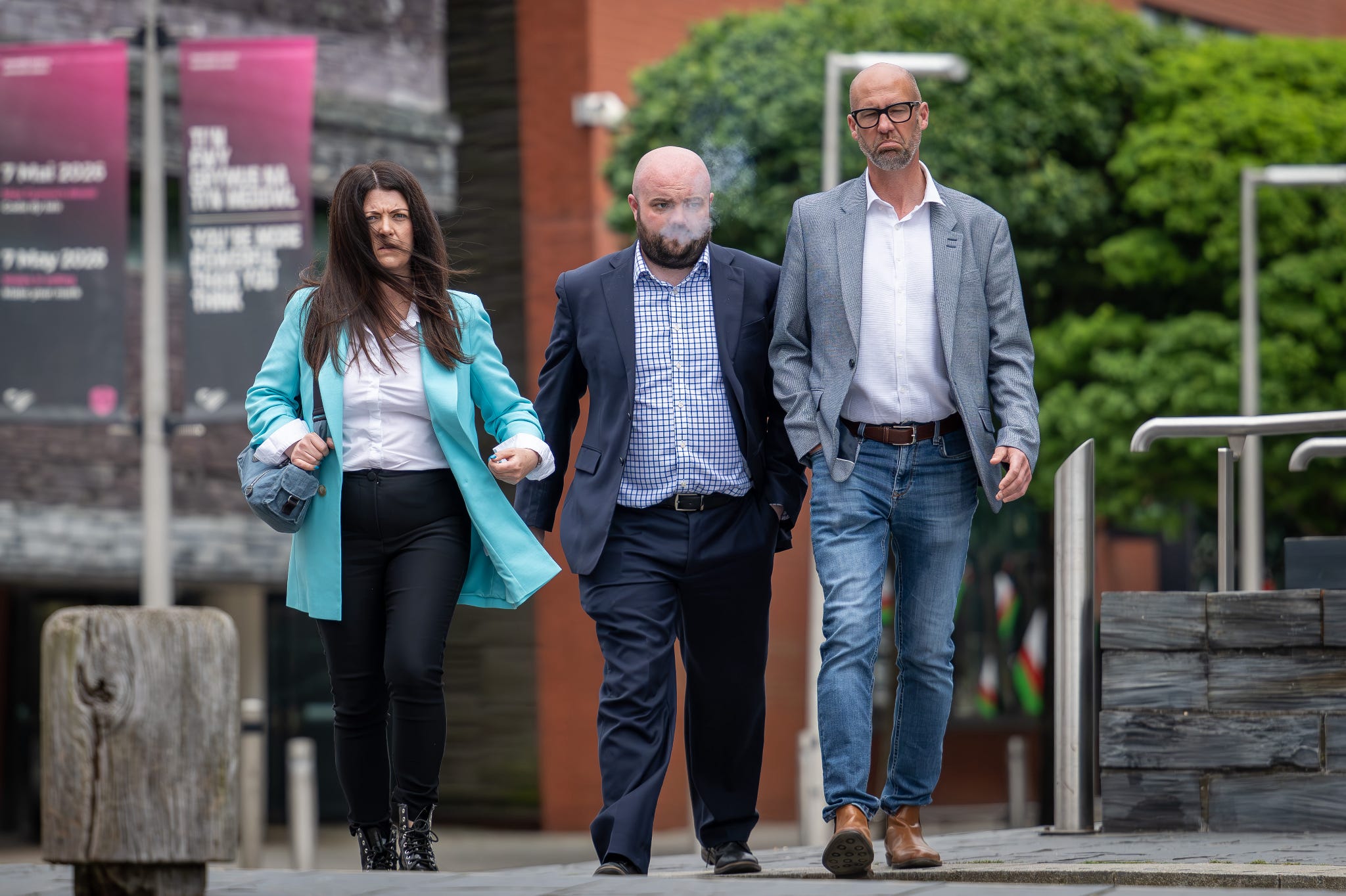
Perhaps nothing sums up the fact the election fell well short of what they wanted than this picture of their deputy leader for Wales Helen Jenner, MS Llŷr Powell and Reform director for Wales David Thomas arriving at the Senedd yesterday.
Plaid have won, but whether they are a success depends on what happens now
I couldn’t believe the size of the crowd of supporters and media waiting outside the Senedd for Plaid leader Rhun ap Iorwerth and the parties’ other 42 newly elected MSs on Satuday.
I have never seen that kind of gathering for a political event in Wales. As the “Class of 2026” walked on to the Senedd steps the emotion was obvious. New Fflint Wrecsam MS Marc Jones has visible tears in his eyes. Some of the longer serving MSs gave each other little side glances when Rhun ap Iorwerth said that they had 43 members. You could tell they couldn’t quite believe what had just happened.
As the photographers struggled to fit them all in shot, Mr ap Iorwerth turned to the crowd and said “it was easier when we had fewer”.
In perhaps the most Plaid thing ever, his questions from the media were cut short because of a spontaneous rendition of the Welsh national anthem.
While this newsletter could be a piece about how “momentous” that moment was – it won’t be. It was just that – a moment. We really need to talk about what happens next.
Be under no illusions, Wales is right now in a state of complete fucking emergency. The longest NHS waits, worst educational outcomes, lowest quality of housing, a stagnant economy. Nothing optimises why it was entirely appropriate to drop the previous f-word like these stats:
45% of those aged under four in Wales live in poverty with more than 30% of all children in Wales in poverty compared to 15% of pensioners.
Huge credit to Plaid for a successful campaign. They have done incredibly, but what happens next is what really matters. However you voted, all of Wales needs them to deliver.
Plaid have made some bold promises about what they would do in their early days in charge. They have repeatedly pledged to bring change in Wales, to improve people’s lives, and for things to be different than how they were under Welsh Labour.
Plaid didn’t just need to win power, they needed to succeed in power.
So what will they do now?
Pick a fight with Westminster
In the coming weeks expect Plaid to publish a list of demands from the UK Government and seek to open negotiations.
They have already outlined what they are looking for in both their manifesto and a 60-page “first 100 days in government” document.
These include:
Wales’ share of HS2 funding - £3-4bn (ish).
Changes to the Barnett formula (the way Wales gets most of its money).
More cash for restoring/making safe coal tips.
Devolving welfare so Wales has the same powers as Scotland.
Giving Wales control over the Crown Estate (more than £600m of Welsh land including 65% of the coast and the sea bed 12 miles out to sea). The Crown Estate is devolved in Scotland but not Wales.
Devolving justice (again, Scotland has this but Wales doesn’t).
Giving Wales the ability to change income tax bands in parity with Scotland.
Now, of course Plaid won’t be marketing this as “picking a fight”. They will say they want to “open discussions/negotiations with the UK Government for the tools Wales needs to succeed”. But realistically, it seems very likely that, in the coming months, there is going to be three possible outcomes:
Plaid ask for concessions and UK Labour say “no” outright. In this case, Plaid will be using their new position at the head of the Welsh Government to make a hell of a lot of noise that Wales has a worse deal than Scotland. They will go down the SNP route of saying Westminster is “holding Wales back”. The UK Government would be, in my view, foolish to follow this line but given some recent comments (which we will get to later) I wouldn’t be suprised.
Plaid asks for concessions and UK Labour gives a little but not close to what is requested. I think this is most likely. I reckon the UK Government will make a show of giving Wales some small concession but well short of what Plaid are demanding. We will then get drawn into a protracted PR battle between the two governments with Westminster saying “we have been really generous” and Plaid saying “you have been really stingy”. I wouldn’t be surprised if the UK Government tacitly agrees to the principle of changes but then ties it up in a lengthy negotiation process in the hope it will just whither in the long grass.
The UK Government makes a meaningful concession. This might be too much to hope for. I have literally written a book on how the current system simply doesn’t work and keeps Wales poor. But if the UK Government does make a meaningful concession to Plaid, it would be a huge feather in the cap for Mr ap Iorwerth. You would probably also be able to hear Eluned Morgan shouting: “Why the hell didn’t you do that for me?”
I think the second option is the most likely but weirdly, the third might be the best tactic for UK Labour politically. Though there might be an initial boost for Rhun ap Iorwerth from getting the change, it would also put real pressure on Plaid to deliver quickly. It would be harder for Plaid to blame Westminster if UK Labour provides them with more tools and noticeable change isn’t achieved quickly.
What else will Plaid be doing?
As we have said, Wales is in the midst of a public services emergency. Plaid has got to tread a tricky line between haste and speed. Much of their 100-day plan was, really, outlining how they were going to build a plan.
In 100 days we will be bang in the middle of August. By then Plaid say they will have:
Commissioned an independent review on the performance of the NHS in Wales.
Begun an “Elective Care Task and Finish Group” which will create a delivery plan to be published by the end of 2026. In simple terms, this will be aiming to set up 10 new “elective hubs” to work through the NHS waiting lists.
Worked with local authorities and childcare providers on plans to urgently complete the rollout of 12.5 hours of funded childcare for all two-year-olds.
Expanded free school meals to all secondary school pupils in households claiming Universal Credit by the start of the new school year in September this year.
This is far from the full list. You can see a more detailed breakdown in our newsletter here or you can read the document itself here.
But there are some serious questions about what is to come:
How are they going to follow through on their plans with the current civil service?
Plaid have A LOT they want to do. But it won’t actually be them doing the heavy lifting, it will be the Welsh civil service. This could present an issue.
Let’s look at some figures…
The Welsh Government has fewer than 6,000 civil servants. Cardiff Council has over 15,000.
Between 2017 and 2024, the Department for Education in England increased the numbers of civil servants by 53%. Over the same period the Scottish Government grew by a remarkable 70%. Over that time Welsh Government staff numbers increased by just 17% across the whole range of its responsibilities.
Brexit increased the responsibilities resting with the UK, Scottish and Welsh governments as those powers were transferred from the EU. The Department for Environment, Food & Rural Affairs in Westminster had 6,000 people working in it in 2017, by 2024 they numbered more than 13,000.
It wasn’t just Westminster increasing its capacity. The Scottish government went from just under 16,000 civil servants to more than 26,500.
How many did Wales recruit? Just 800.
Plaid are going to find it tricky to drive the changes they want with the tools they have.
How open are Plaid going to be and how do they bring the public with them?
There is a real fear in Plaid that they “do a Keir Starmer”. They have been elected on a platform of “change” and people want fast results. The problem with this is Wales’ problems are entrenched and likely not easily fixed. It will take time.
When we spoke to Mr ap Iorwerth in April, he told me his party would:
“... within the first 100 days [establish] a digital dashboard that will allow people to know what we’re aiming for, so that they can hold us to account on whether we get there. I think it’s part of the contract that people would expect with a Welsh Government is to know what it is that they’re holding them to account for.”
Plaid is going to need to take people with them. A key part of that isn’t just in what they do, it is communicating why they are doing it and how they are getting on.
Their 100-day document says they will “agree a set of measurable outcomes and progress milestones – widely shared – where we can measure the success of our initiatives in changing people’s lives for the better”.
All parties say they want to be open, but the proof of the pudding will be in the eating. When things get hard and the data doesn’t look good, will this spirit of openness be maintained and will they be able to keep the public’s good will?
Will they grasp the nettles?
There are several big uncertainties around what Plaid is actually going to do:
Environment/farming. Ahead of the election, climate change and net zero were among the weakest areas of Plaid’s messaging. If Wales is to hit its targets on climate change and habitat restoration, there are going to need to be some challenging conversations with the many rural voters who just backed them. So far I believe Plaid have straight up dodged the reality of the changes that Wales needs to make.
Green energy and development. This was another area where Plaid could be hit with a big dose of reality. They have talked about harnessing Wales’ green potential, but haven’t really set out a realistic way this can be done and have dodged big questions on pylons and grid capacity.
Rationalising Wales’ public services. Everyone can see that governance in Wales is too convoluted with far too many silos and competing interests. During the campaign Plaid steered away from committing to any meaningful changes to healthboards, councils or quangos so as not to scare the horses. But if they really want to change Wales, they are going to need to have some difficult conversations and face the pushback that comes with tackling vested interests.
That’s all on Plaid for now, but for the next four years, scrutinising, challenging them and holding them to account is going to be the overwhelming point of this newsletter. Proper scrutiny will be vital for good governance, especially if they are not getting it in the Senedd. This leads us on to…
Reform as the official opposition

I have been genuinely shocked at how invisible Reform UK’s leader in Wales has been since the election.
We discussed on Friday how anything less than a resounding win was a real issue for Reform. Over the weekend, it was Llŷr Powell (AKA Welsh Dave) being put up for interview on BBC Wales, not their leader. It feels like the disappointment of Thursday’s vote has sapped their momentum.
This is a real issue. Wales needs a real, engaged and credible opposition to Plaid Cymru. Opposition isn’t just a string of social media posts of Dan Thomas asking a question in First Minister’s Questions once a week.
It happens via engagement with committees, offering real alternatives and being across details. I hope I am wrong, but from conversations I have had with people within the party (off the record obviously because they get told off if they speak to us), I understand they plan on mainly using the chamber as a chance to create social media content above anything else.
I also think in the coming weeks there is going to be a serious strop by some in Reform when the shadow cabinet is put together. There will be up to 19 people in Reform’s shadow cabinet, meaning there will be 15 people left out. I would suspect that some of them will be rather frustrated.
